For millions of homeowners who rely on a private residential well system rather than municipal city water, uninterrupted water flow is essential to daily living. When clean water flows from the tap effortlessly, it is easy to take the underground infrastructure for granted. However, when water pressure abruptly drops, faucets begin sputtering air, or water stops running entirely, diagnosing the problem quickly becomes a top priority.
Understanding how a residential well system functions—and recognizing early warning signs of mechanical failure—can save homeowners thousands of dollars in premature pump replacements.
How a Private Well System Works
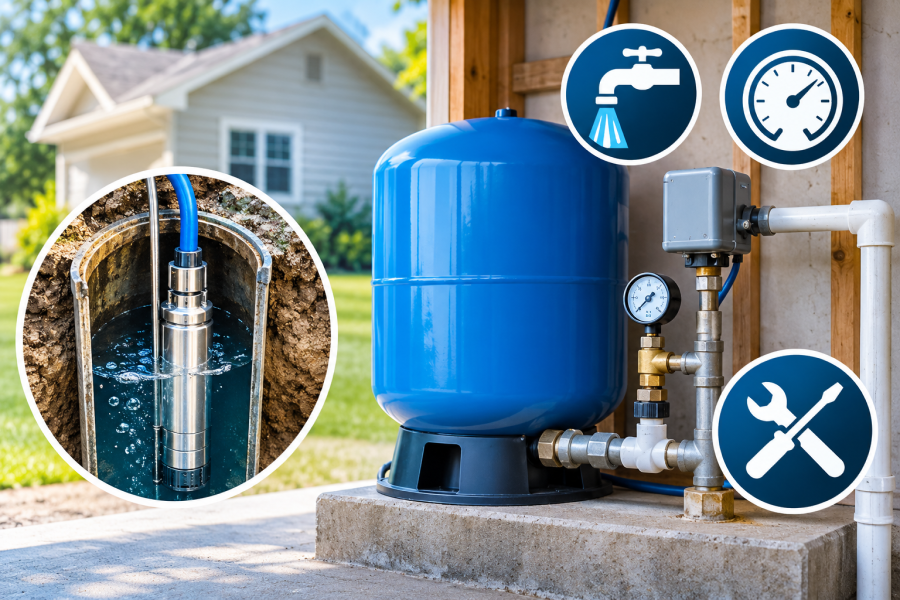
A standard residential well system relies on three fundamental components working in unison:
- The Submersible Well Pump: Located deep underground inside the well casing, this motor pushes water up through the delivery pipe toward the surface.
- The Pressure Tank: Positioned inside a garage, utility closet, or pump house, this tank uses an internal air bladder to maintain steady water pressure throughout the plumbing lines.
- The Pressure Switch: An electromechanical switch that monitors system pressure, turning the pump on when water pressure drops below a set threshold (typically 30 or 40 PSI) and cutting power when target pressure is reached (typically 50 or 60 PSI).
When any of these three elements fails or falls out of calibration, the entire household experiences water delivery issues.
Common Signs Your Well Pump System Needs Immediate Attention
1. Short-Cycling (Rapid Clicking)
If you hear your pressure switch rapidly clicking on and off every few seconds while running water, the system is short-cycling. In most cases, this indicates a waterlogged pressure tank where the internal bladder has failed or lost its air pre-charge. Left unaddressed, rapid short-cycling causes the pump motor to overheat and burn out prematurely.
2. Sputtering Faucets
When air pockets form in your water lines, faucets will cough and spit violent bursts of water and air. This often points to a failing check valve, a drop in the underground water table, or a cracked drop pipe allowing air to be drawn into the pump intake.
3. Low or Inconsistent Water Pressure
Showers that suddenly turn to a trickle while a washing machine runs are common signs of flow restriction. This can stem from sediment buildup in the intake screen, a failing pump impeller, or an aging motor struggling to maintain operating RPMs.
4. Continuously Running Pump
A well pump that runs non-stop without building sufficient pressure to trip the pressure switch signals a severe mechanical breakdown, a ruptured underground pipe, or a low-yielding well aquifer. Running a submersible pump dry will rapidly destroy the motor bearings.
Professional Repair vs. System Replacement
While minor issues such as a clogged pressure switch or an electrical breaker trip can sometimes be inspected with basic safety precautions, pulling a heavy submersible pump from hundreds of feet underground requires specialized hoist equipment and electrical expertise.
When encountering severe pressure loss or electrical faults, scheduling an on-site diagnostic with a trusted contractor like Treasure Coast Well Pump Repair ensures that pressure tank calibration, flow rates, and motor amp draw are measured accurately before deciding between a targeted repair or a complete pump replacement.
Proactive Maintenance Tips for Long-Term Reliability
- Inspect the Well Cap: Ensure your sanitary well seal is intact and elevated at least 12 inches above grade to keep surface water and insects out of your drinking supply.
- Monitor Tank Air Pressure: Annually check the pressure tank’s Schrader valve with a standard tire pressure gauge while the system is depressurized. The air charge should sit exactly 2 PSI below the cut-in pressure.
- Protect Electrical Controls: Keep insect covers and weatherproof housings securely closed around pressure switches and control boxes.
A well-maintained water well system can deliver clean, reliable water for 15 to 20 years. By staying alert to early symptoms of pump distress and addressing mechanical wear promptly, homeowners can ensure reliable water security for years to come.